BLUF
All 20 large US banks tell the efficiency story about AI. After that they diverge, and what analysts ask is not what executives volunteer. Four takeaways for any executive team:
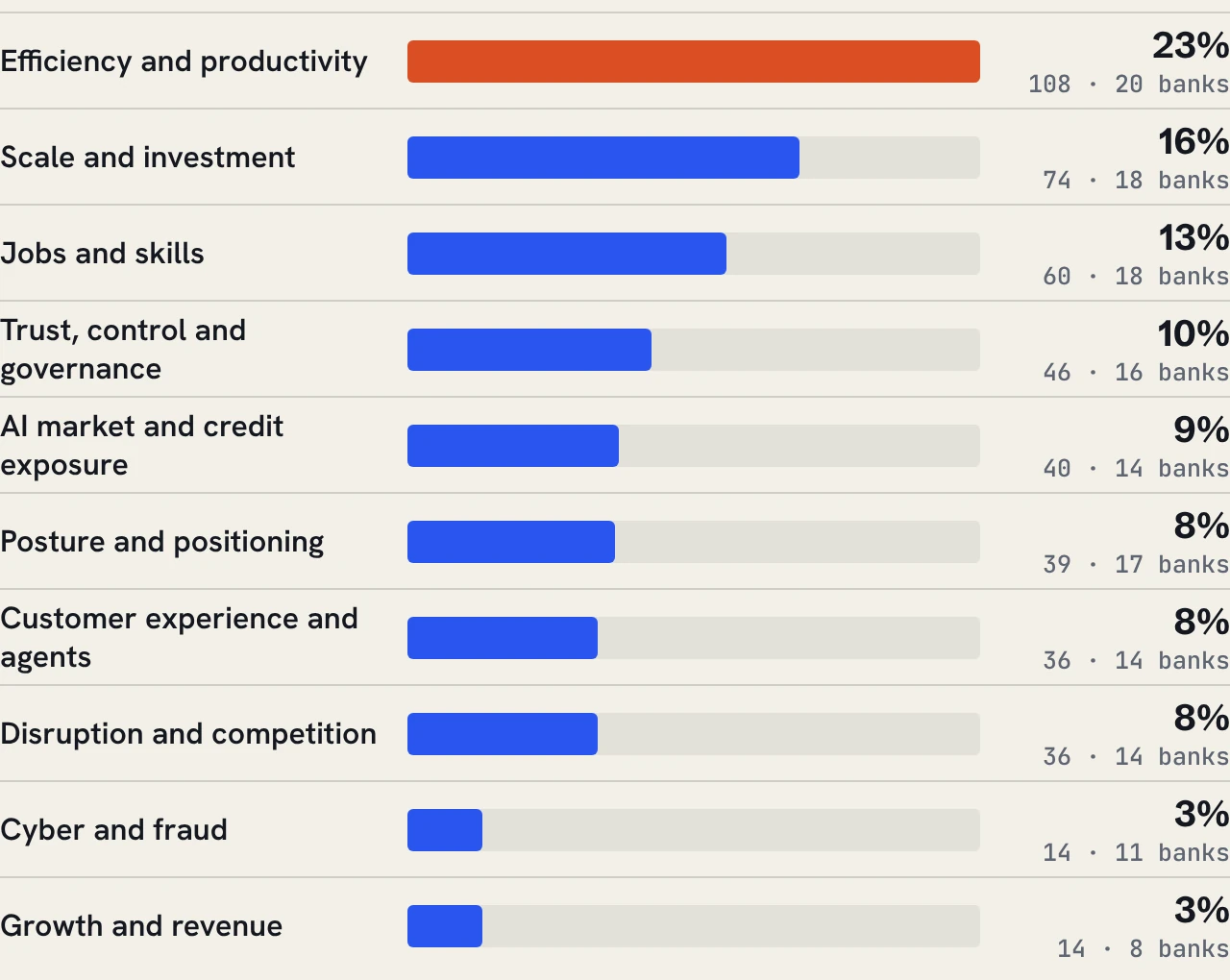
- Efficiency is common ground, not differentiation. All 20 banks tell it (108 of 467 executive statements). Growth and revenue (14) and customer outcomes (36) are told far less often.
- Say what you can measure, and by when. Most statements describe a direction, not a result: 64% are directional, 19% are rhetorical and 17% carry a number. The commitments with a figure and a date are the ones analysts can test on a later call.
- Pick a position on jobs and use it everywhere. 60 statements at 18 banks range from “We're not laying off anybody” to reductions with percentages attached. Executives are quoted on it across calls, interviews and conferences.
- Prepare for the questions analysts ask. Disruption is 25% of analyst questions and 8% of executive statements. Exposure to the AI buildout is 18% of questions and 9% of statements.
How to read this study
We analyzed 555 statements from earnings calls, analyst questions and press interviews at 20 large US banks between October 2025 and November 2026.
Each statement is one of three types. A claim says what AI is doing now. A promise says what it will do. A watchout is a risk the speaker names or a caution they attach to AI use, such as a control, a limit or a qualifier. Each statement also carries one theme and a rating for how well it is supported: rhetorical, directional, quantified, or quantified and dated.
The study describes what was said. It does not grade anyone’s results or intent.
Efficiency is the one story all 20 banks tell
The most specific efficiency statements give a share or a figure. Bank of America’s CEO described a saving in software delivery on the fourth-quarter 2025 call: “We've taken 30% out of the coding part of introducing a new product to service or change that saves us about 2,000 people.” BNY’s CFO gave a share on the second-quarter 2026 call: “roughly 40% of the software written is now written using AI”. PNC’s CEO put the economics in one line in October 2026, saying AI plans will cost “hundreds of millions to save billions”.
Scale and investment is the second most common theme, with 74 statements at 18 banks. It covers spending, build-versus-buy choices, platforms and partners.
Same technology, different emphasis
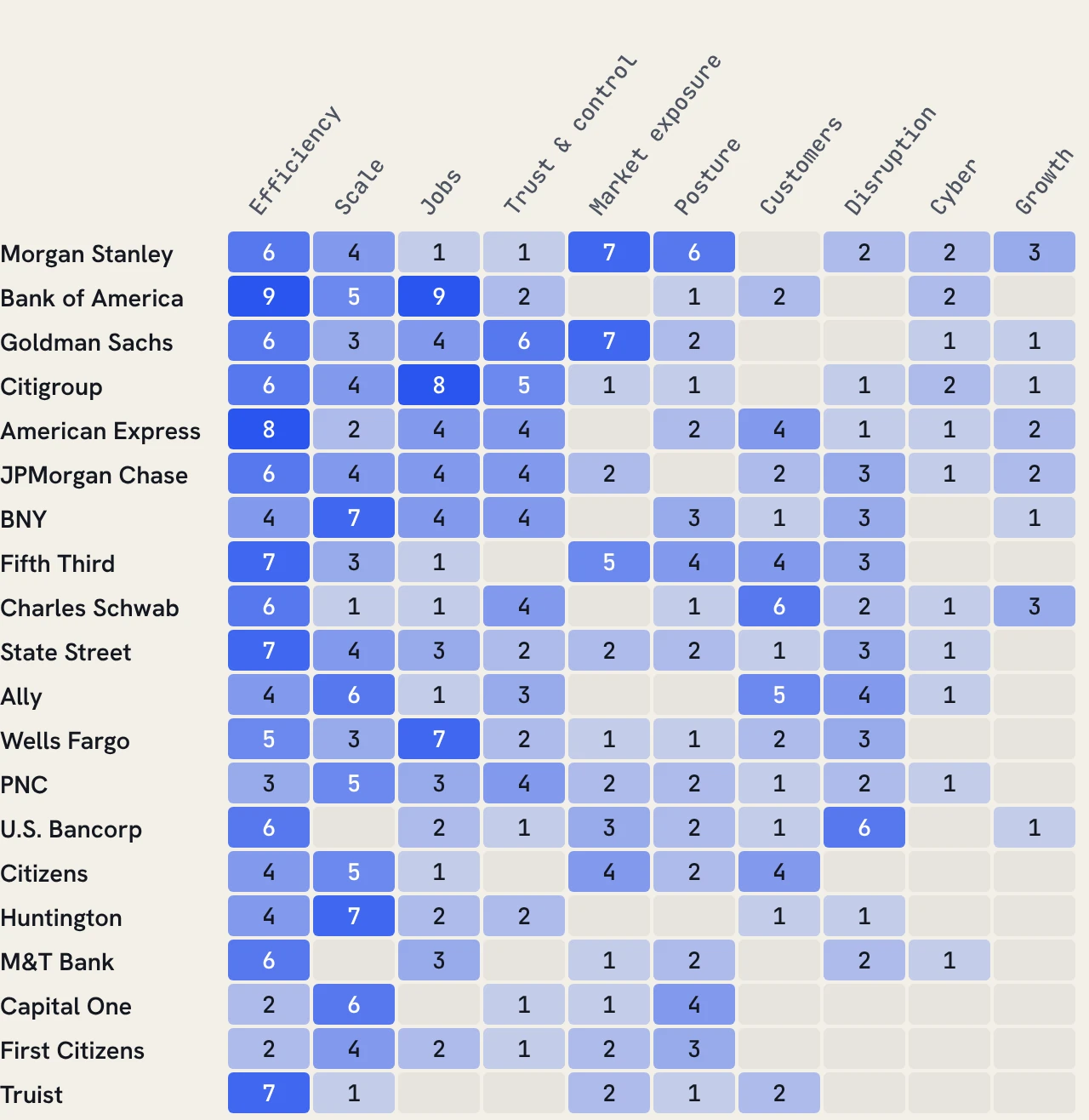
After efficiency, emphasis varies. Morgan Stanley and Goldman Sachs each have seven statements about AI’s market and credit exposure, the most at any bank. Citigroup and Bank of America lead on jobs, with eight and nine statements. Schwab has the most statements about customers and agents, with six. The bank snapshots near the end show each bank’s three most frequent themes.
Jobs: four ways banks talk about AI and headcount
Jobs claims and promises carry a number more often than most themes: 29% (14 of 48) include one, against 15% for the other themes combined. The language falls into four stances.
Not through layoffs
“We're not laying off anybody. We don't have to do that. All we do is just manage the hiring carefully”.
Brian Moynihan, CEO, Bank of America. September 2026.
“I understand very much that people view head count changes as the consequence of AI adoption. We don't think about it that way”.
Robin Vince, CEO, BNY. October 2025.
“headcount has trended down a little bit, but that's not really anything to do with AI”.
Dermot McDonogh, CFO, BNY. Fourth-quarter 2025 call.
Bank of America describes its headcount decline as careful hiring and attrition. BNY’s CEO and CFO both separate headcount from AI.
Tasks change, jobs stay
“AI is taking away tasks, not jobs.”
Ron O’Hanley, CEO, State Street. May 2026.
“not that AI is going to take your job away but, someone using AI is probably going to be better at your job than you are.”
Jane Fraser, CEO, Citi. January 2026, at Davos.
“I’m not in the job apocalypse camp”.
David Solomon, CEO, Goldman Sachs. January 2026.
These framings share one idea: AI changes what people do. Citi’s version adds a skills angle, and State Street’s is the shortest.
Fewer people over time
“It's likely we'll have less headcount as we look forward”.
Charlie Scharf, CEO, Wells Fargo. November 2025, in an interview with Reuters.
“I think we will be hiring more AI people and fewer bankers in certain categories, and it will make them more productive.”
Jamie Dimon, CEO, JPMorgan Chase. May 2026.
“But it's going to be a lot of people over time, not just in PNC, but in the technology space, coders in particular, which I think is going to be really disruptive.”
Bill Demchak, CEO, PNC. October 2026.
Wells Fargo, JPMorgan and PNC each describe a smaller or reshaped workforce over time. PNC’s CEO adds that much of the near-term effect falls on offshore contractors: “A lot of this will be offshore contractors no longer being employed with us, which doesn't impact our employees in the U.S.”
Reductions already made
“We have had discrete areas where we did reduce jobs by 30% or 40%, and most of those people offered jobs elsewhere.”
Jamie Dimon, CEO, JPMorgan Chase. Second-quarter 2026 call.
“our headcount was down nearly 3,500 from a year ago as we automate processes and simplify work across the company.”
Bank of America. Third-quarter 2026 call.
“…which has resulted in 23 consecutive quarters of headcount reductions.”
Wells Fargo. First-quarter 2026 call.
Three banks point to reductions that have already happened. Bank of America’s CEO describes the mechanism as hiring and attrition, not layoffs.
The human side of adoption
“There will be job dislocations. The nature of many jobs is going to change.”
Jane Fraser, CEO, Citi. July 2026.
“There’s anxiety about what AI means for jobs”.
Gunjan Kedia, CEO, U.S. Bancorp. October 2025.
“one of the biggest risks to implementation of AI is people being fearful of it and thinking that it's going to replace them.”
Jim DeMare, president, Bank of America. September 2026.
Jobs account for 12 of the 114 watchouts.
What analysts ask
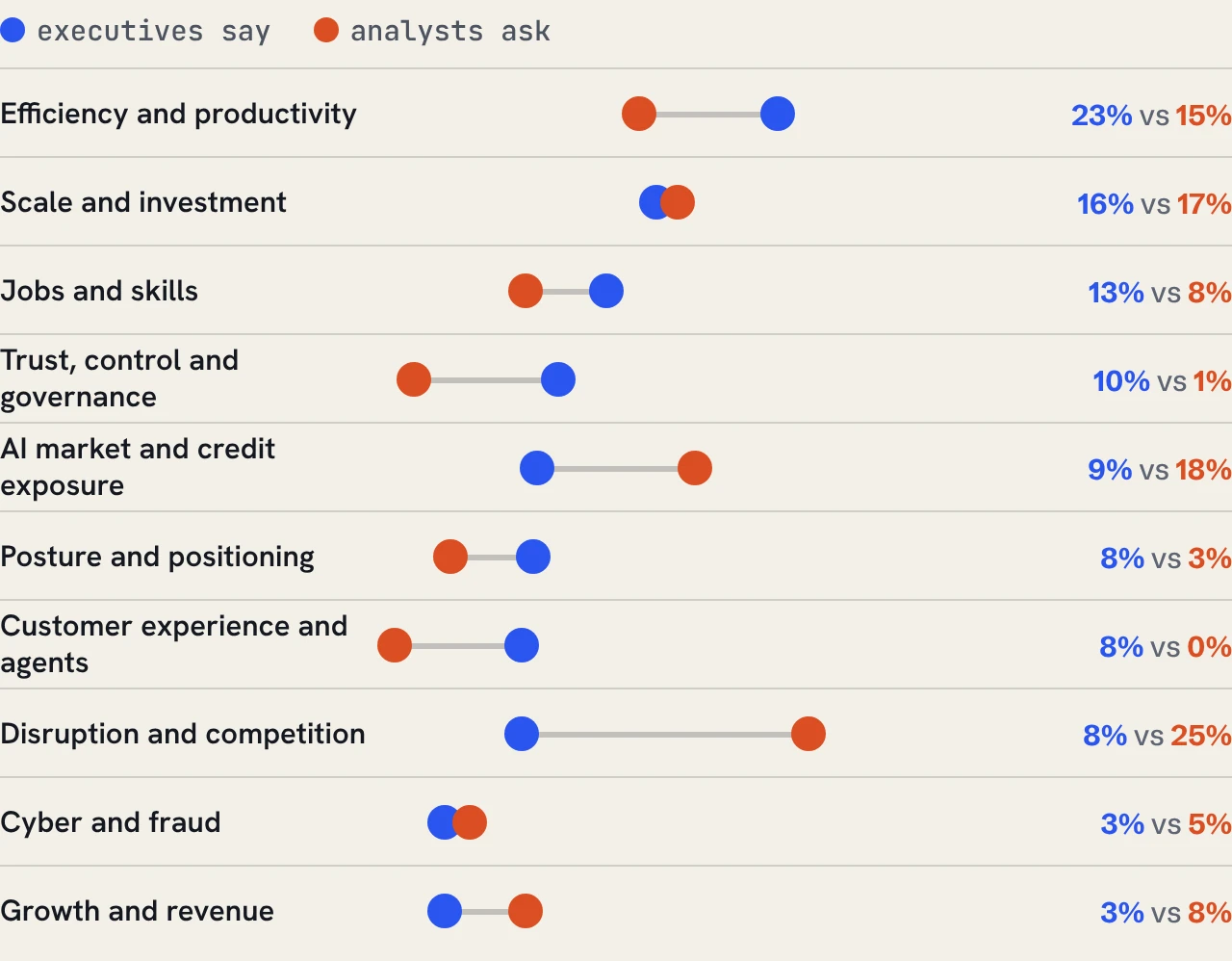
Analysts asked 88 AI questions in the calls we analyzed. The pattern differs from what executives volunteer. Disruption and competition is 25% of questions against 8% of executive statements. Exposure to the AI buildout is 18% against 9%. Trust and control is 1% of questions and 10% of statements.
“As investors think about the risk of maybe an investment bubble around AI, you all have used AI at Goldman Sachs.”
Analyst question, Goldman Sachs. Second-quarter 2026 call.
“a lot of conversation and debate through the quarter on the potential risk to deposit from AI driven cash optimization tools”.
Analyst question, Fifth Third. Third-quarter 2026 call.
“To what extent is Citizens participating in financing this build out?”
Analyst question, Citizens. Third-quarter 2026 call.
Most claims describe a direction, not a result
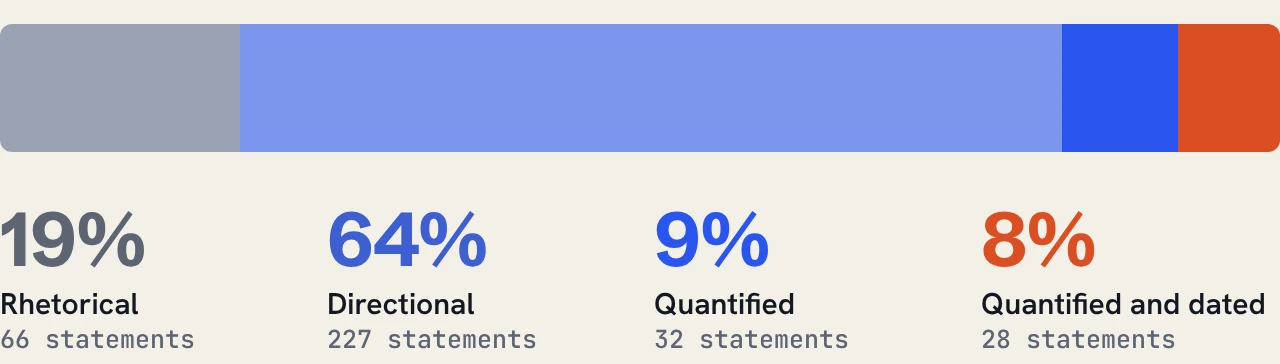
227 of the 353 claims and promises describe a trend without a figure, and 66 are rhetorical. 60 carry a number. The few that also carry a date or a target can be tested later.
Watchouts
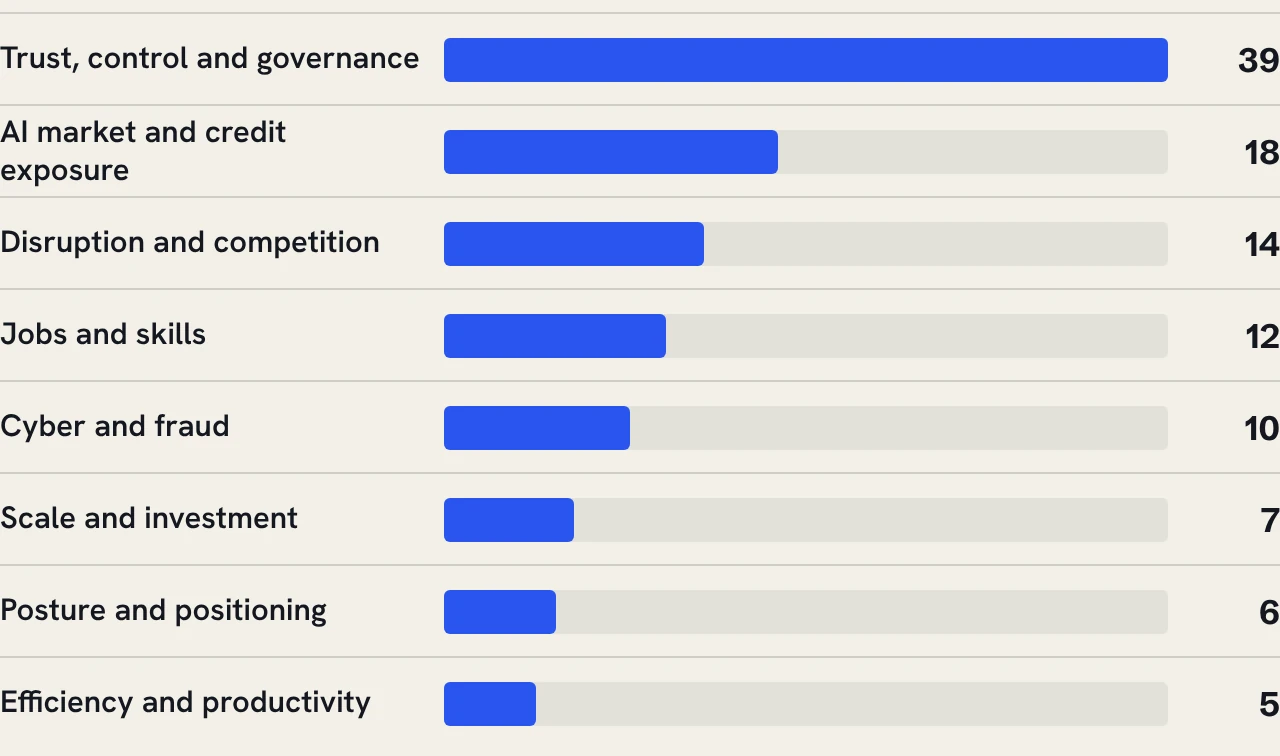
The 114 watchouts name a risk or attach a caution. Most are about control: trust and governance account for 39 and cyber and fraud for 10. Exposure to the AI buildout is next with 18.
“we are not going to allow just any outside agent to come inside the company because it is just too risky for clients and for JPMorgan.”
Jamie Dimon, CEO, JPMorgan Chase. Third-quarter 2026 call.
“We believe strongly the human in the loop because humans control their money and should control their money”.
Brian Moynihan, CEO, Bank of America. Third-quarter 2026 call.
“the other thing to be very careful about is just the AI theme, because the AI theme is so broadly diffused into the marketplace.”
Jeremy Barnum, CFO, JPMorgan Chase. Third-quarter 2026 call.
“the one guaranteed rule is that we will misestimate the amount of capacity that's required here”.
Tim Spence, CEO, Fifth Third. Second-quarter 2026 call.
Bank snapshots
Each card shows the bank’s share price, its latest quarter and analyst consensus next to the themes its executives used most. Market data is context from a third-party feed, not a recommendation.
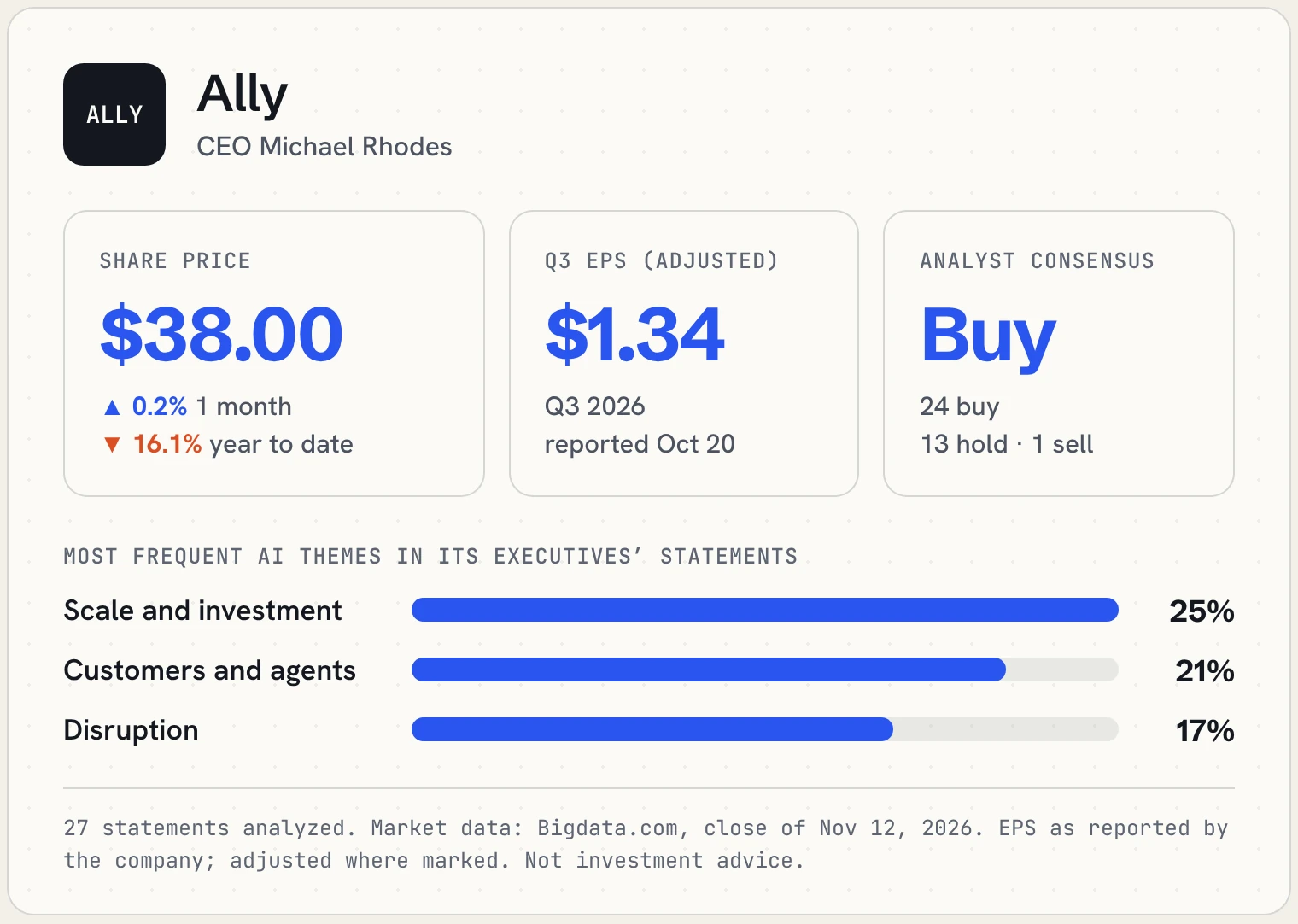
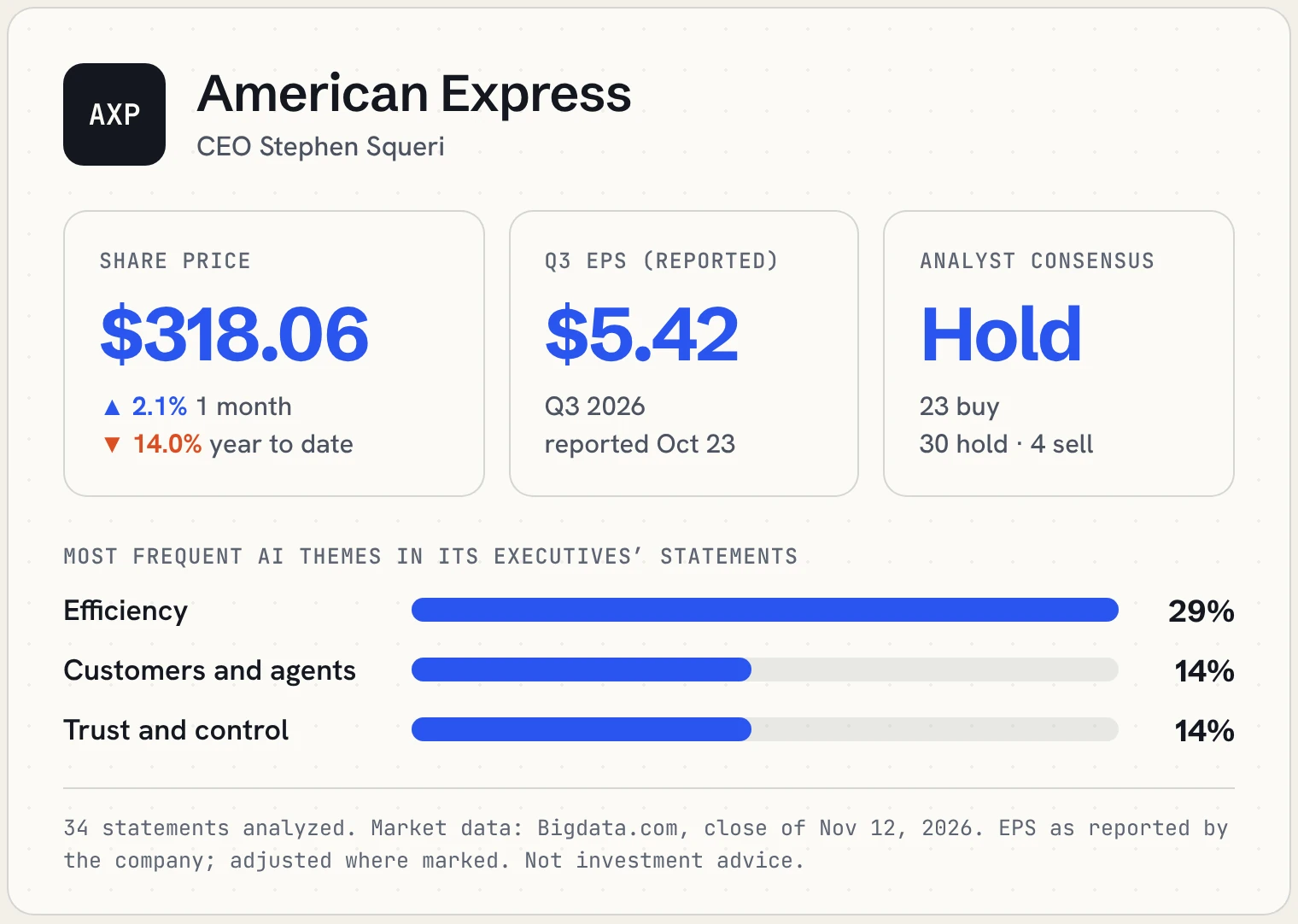
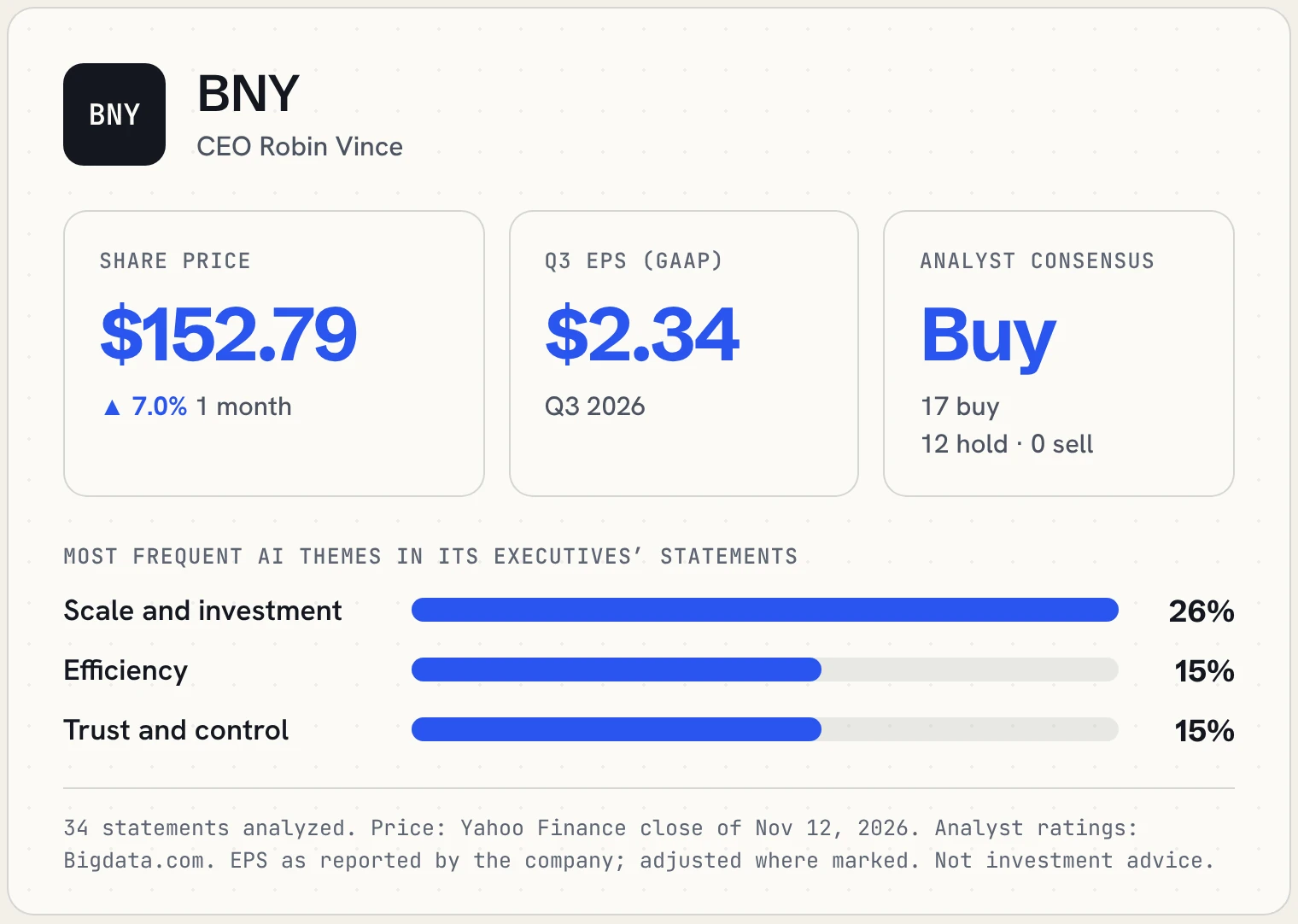
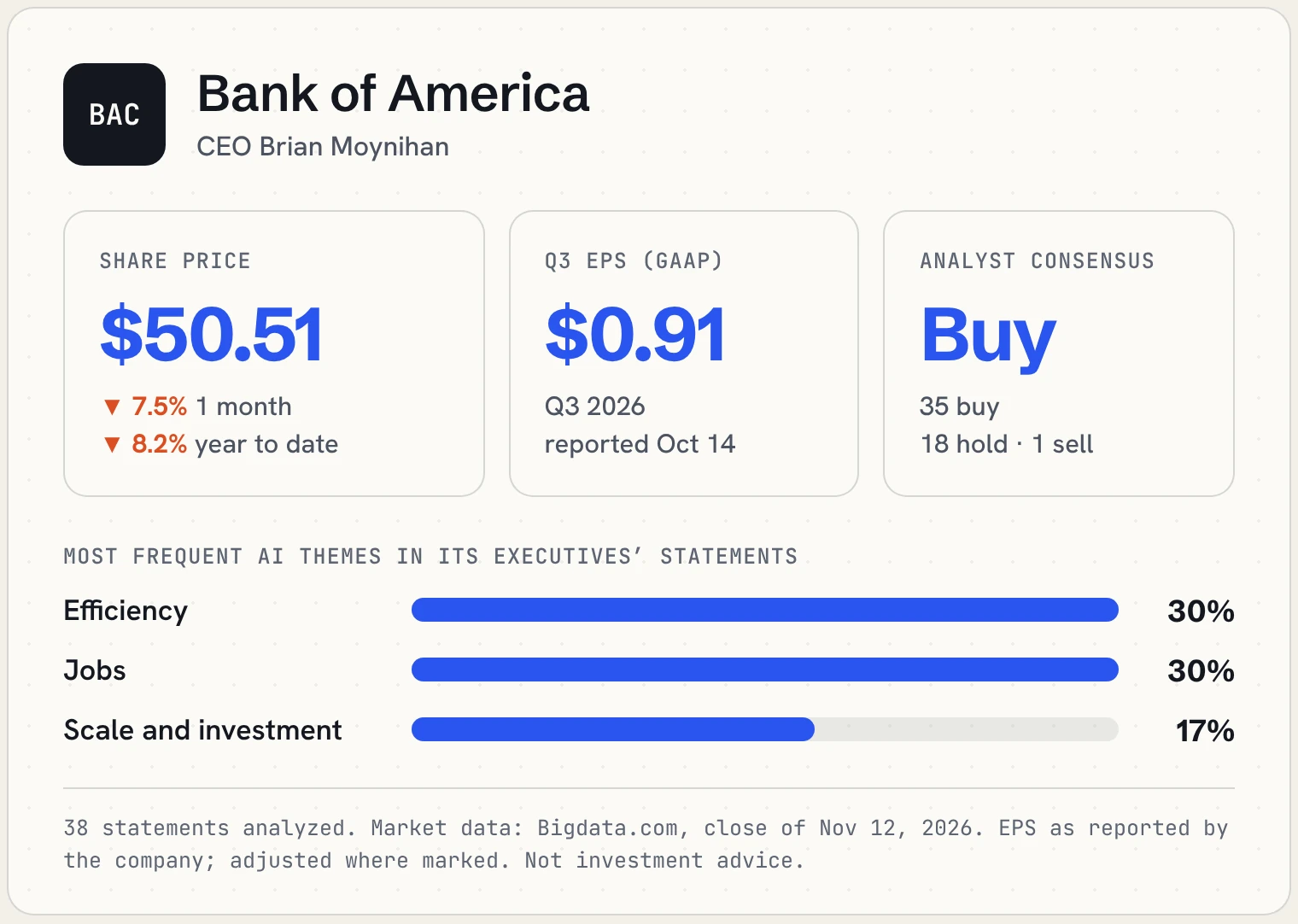
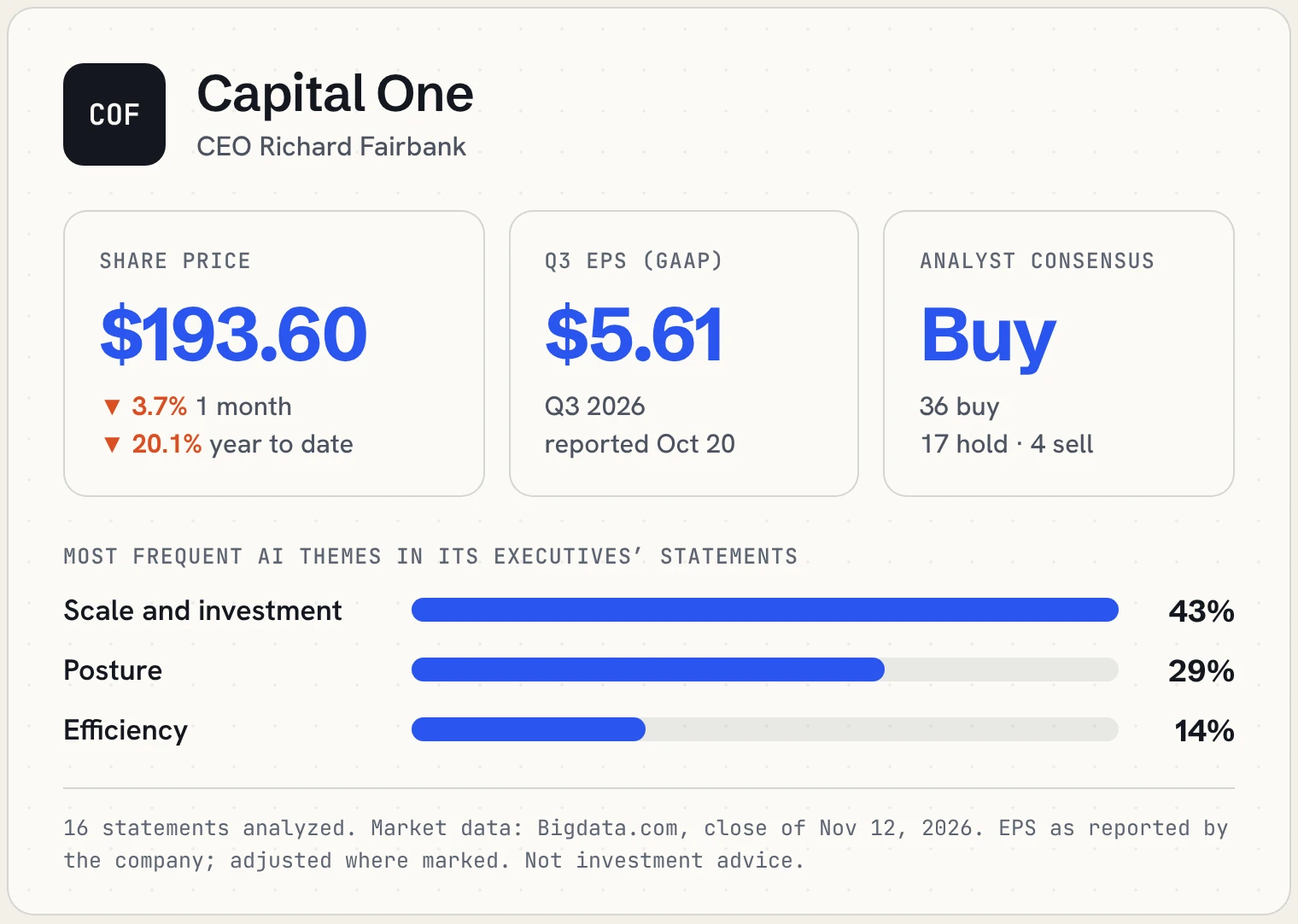
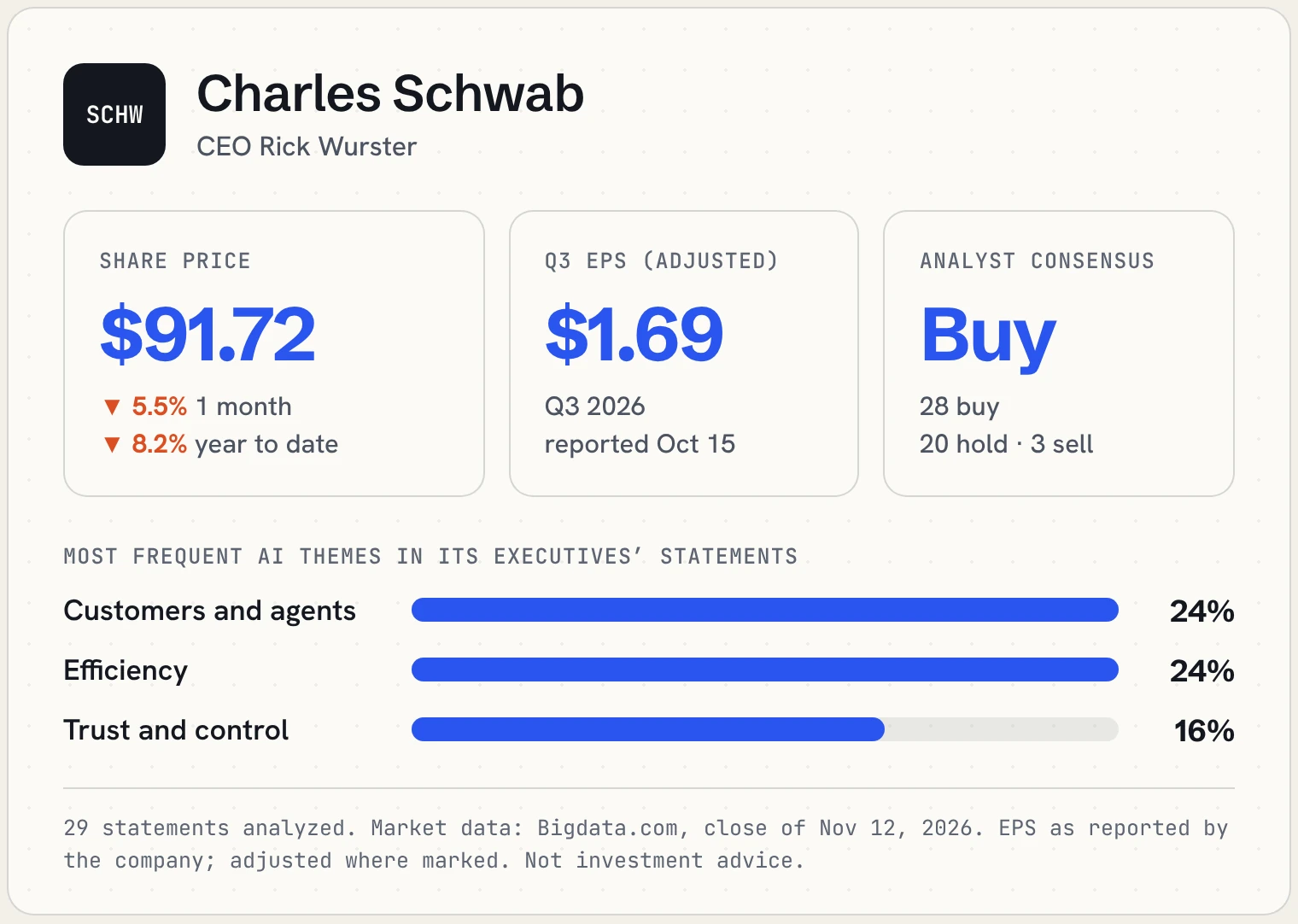
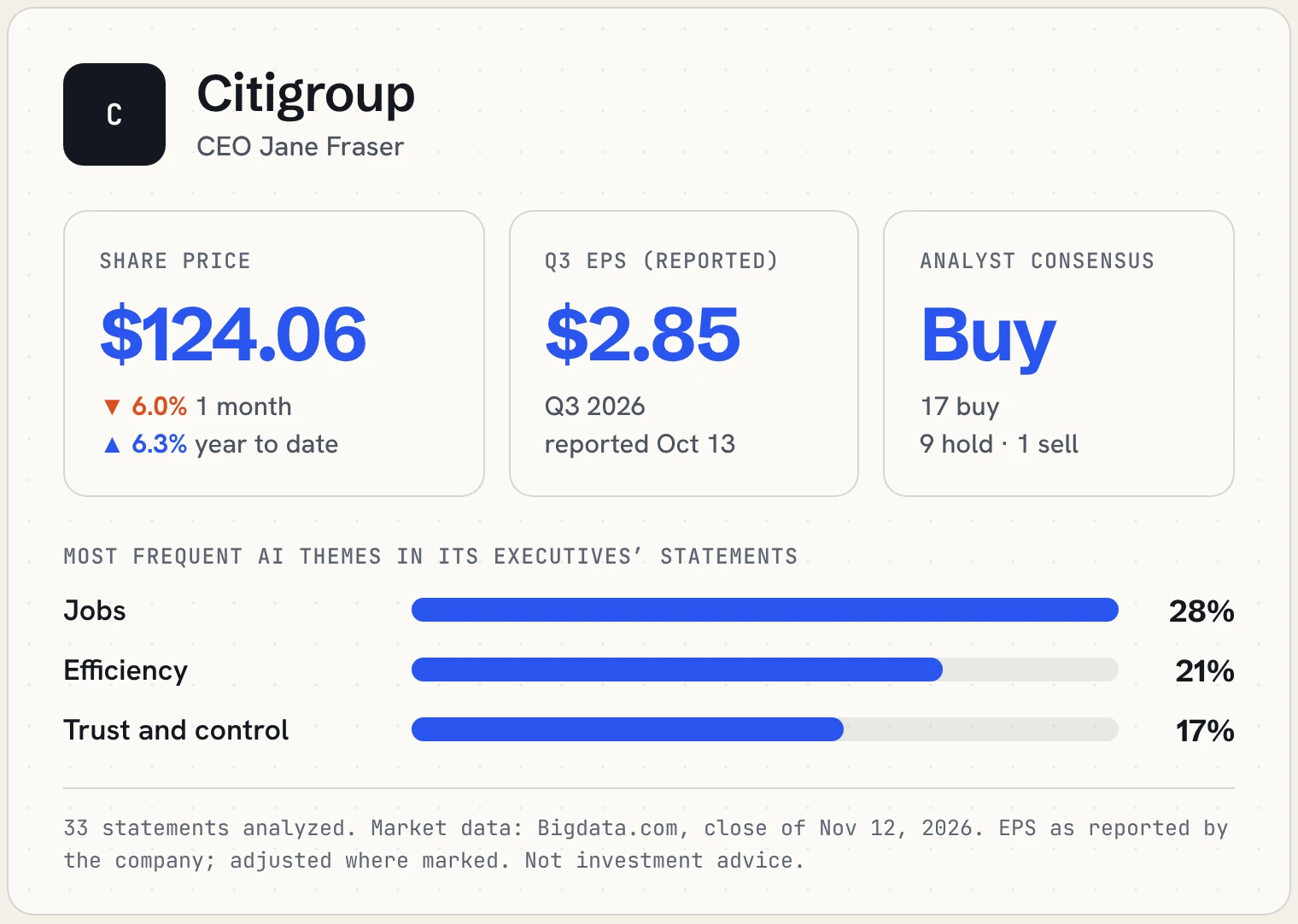
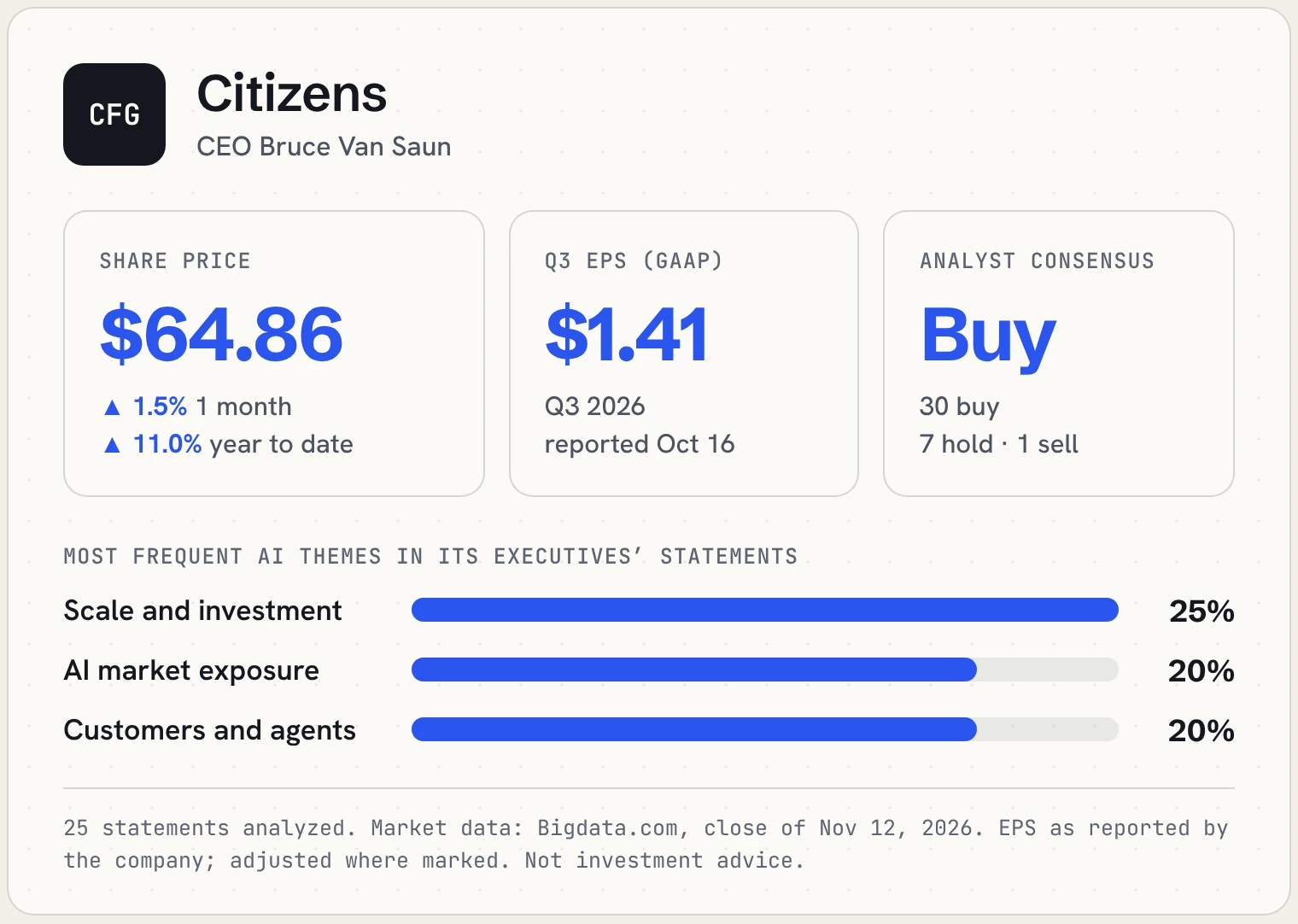
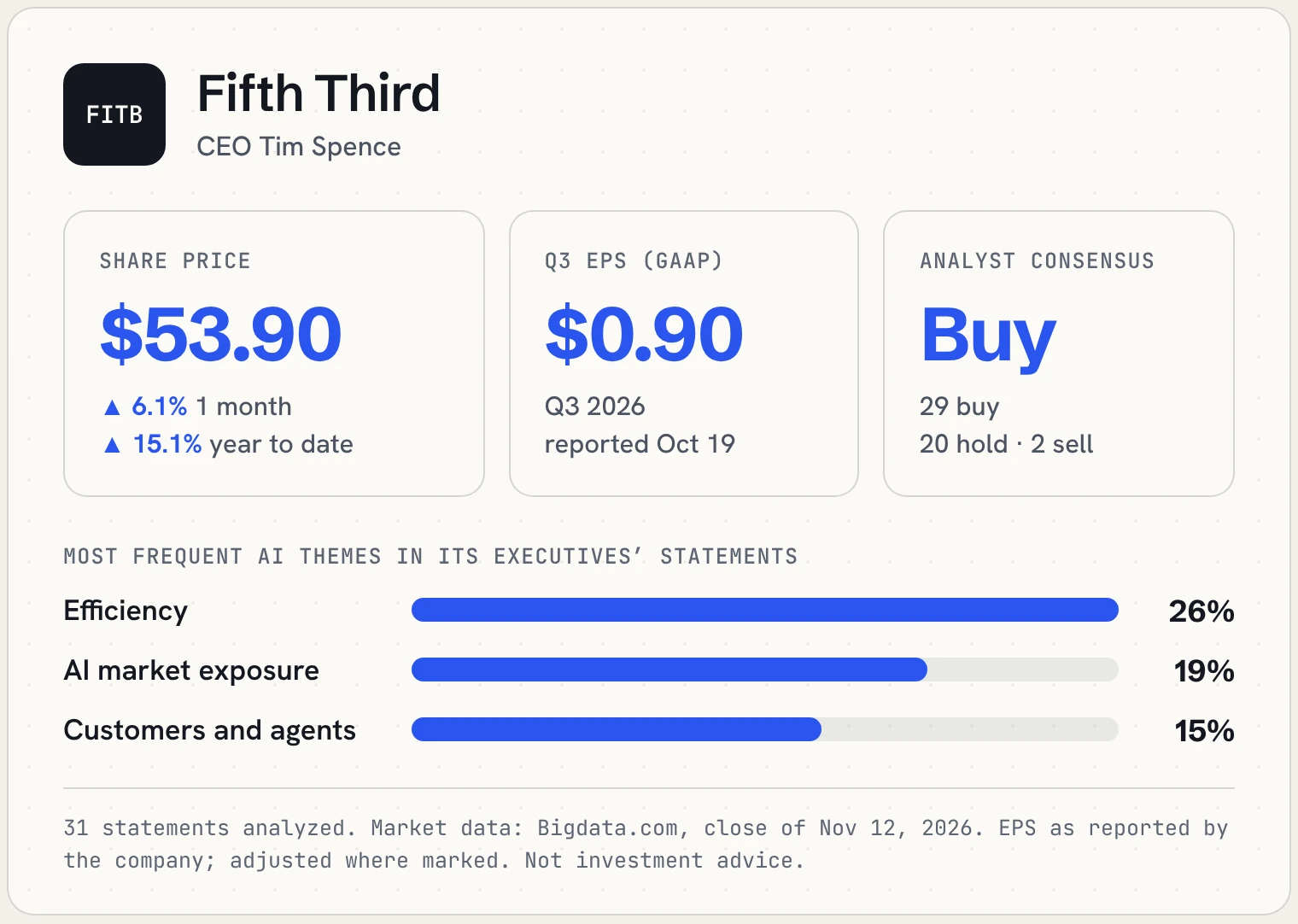
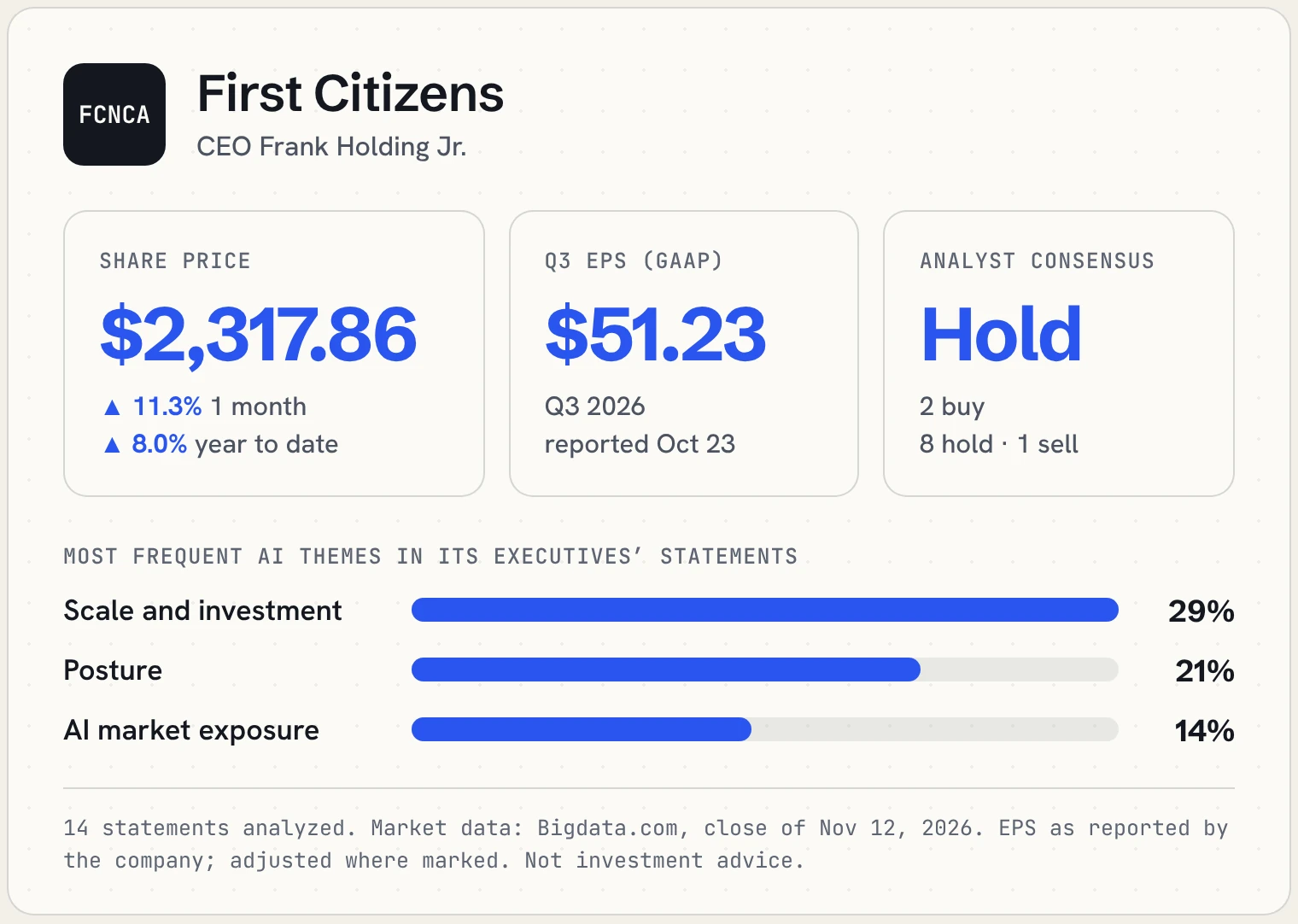
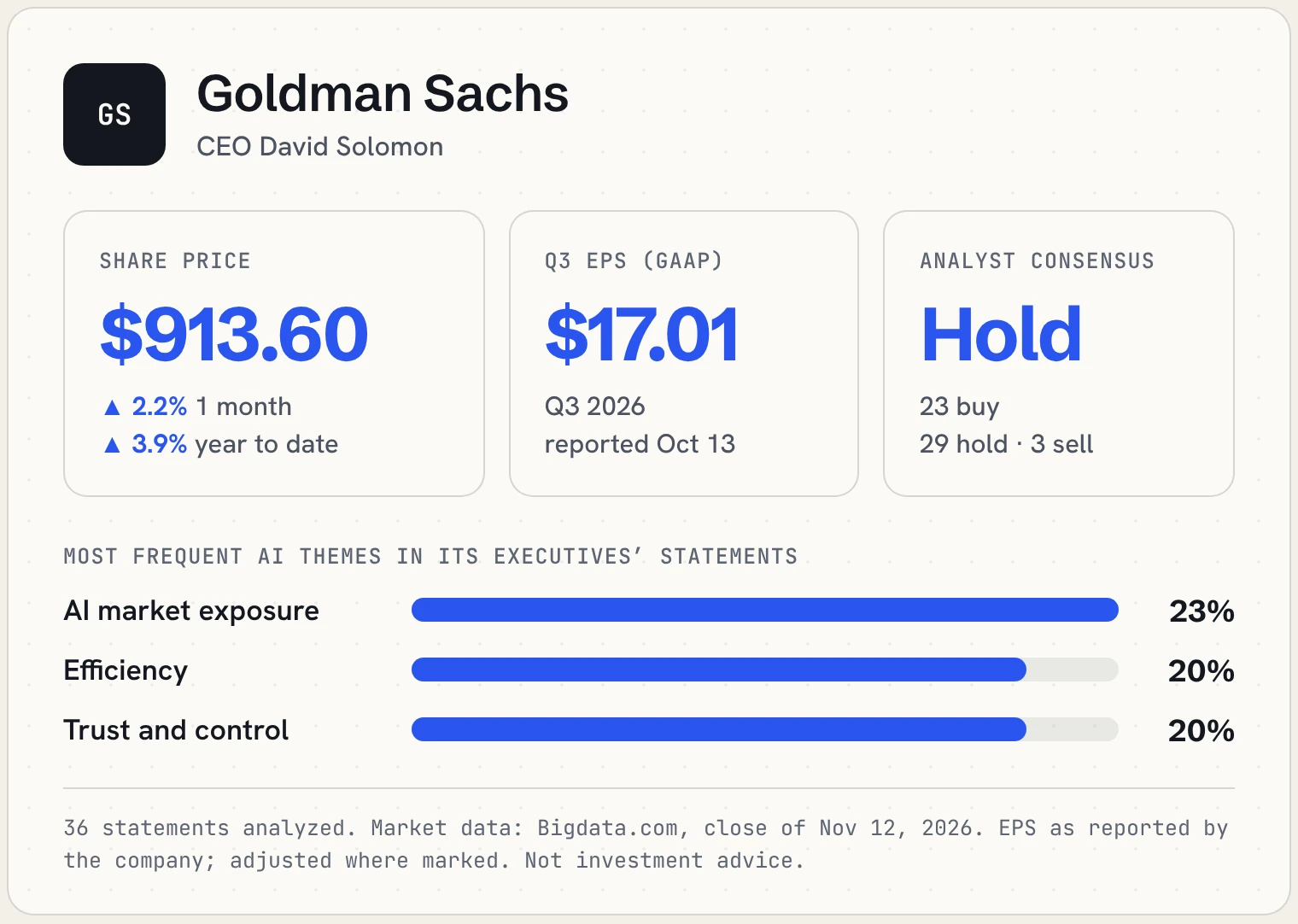
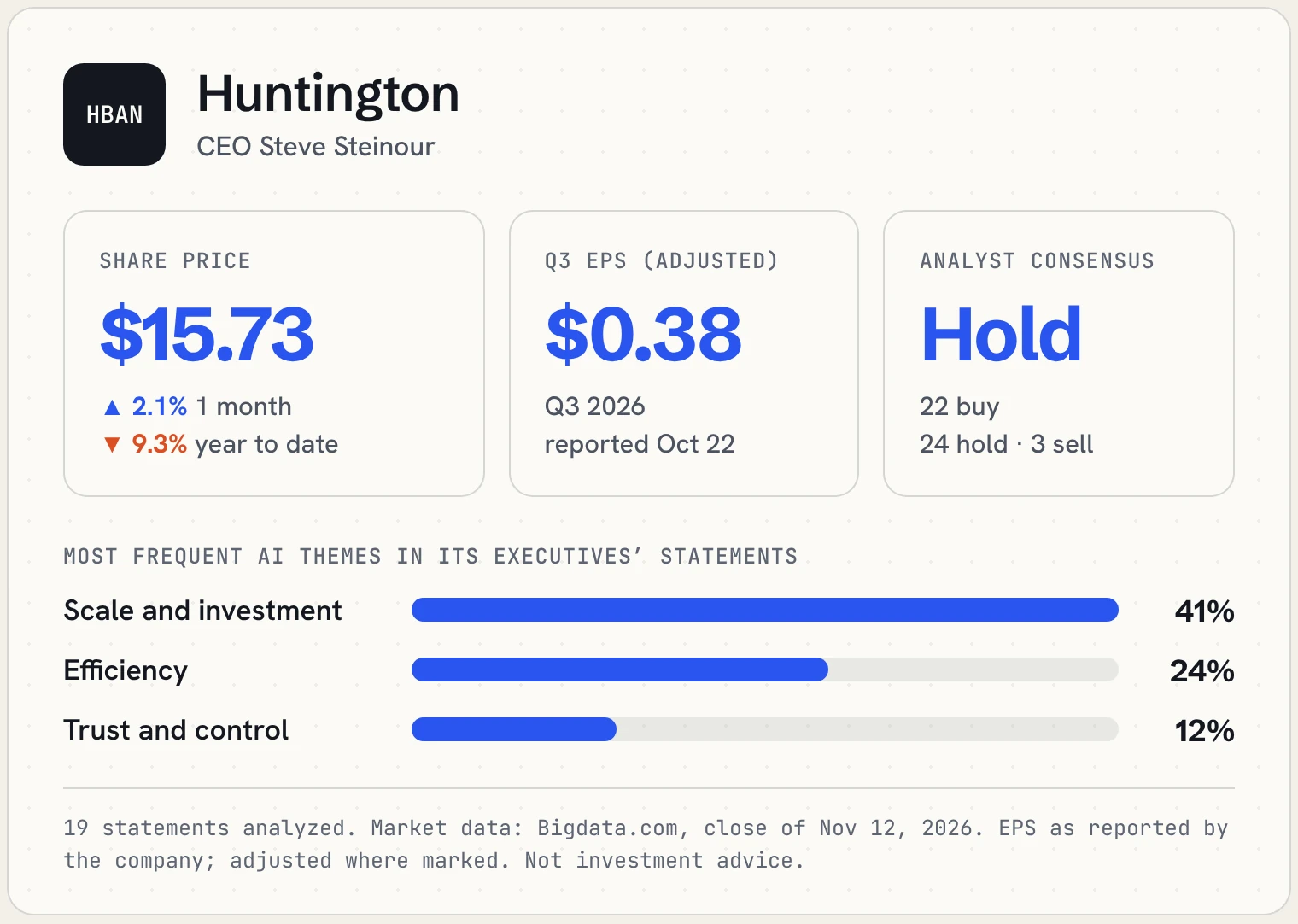
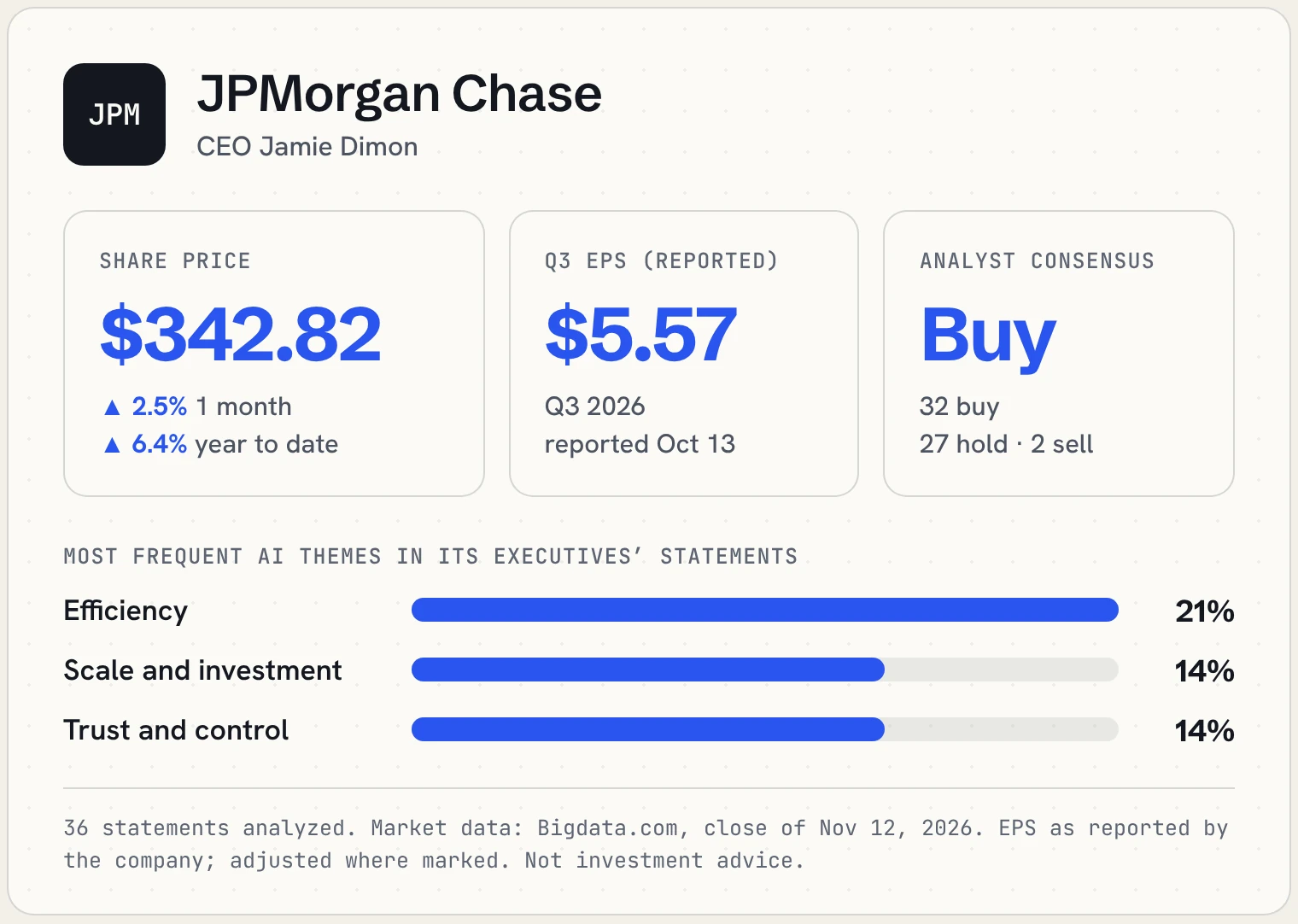
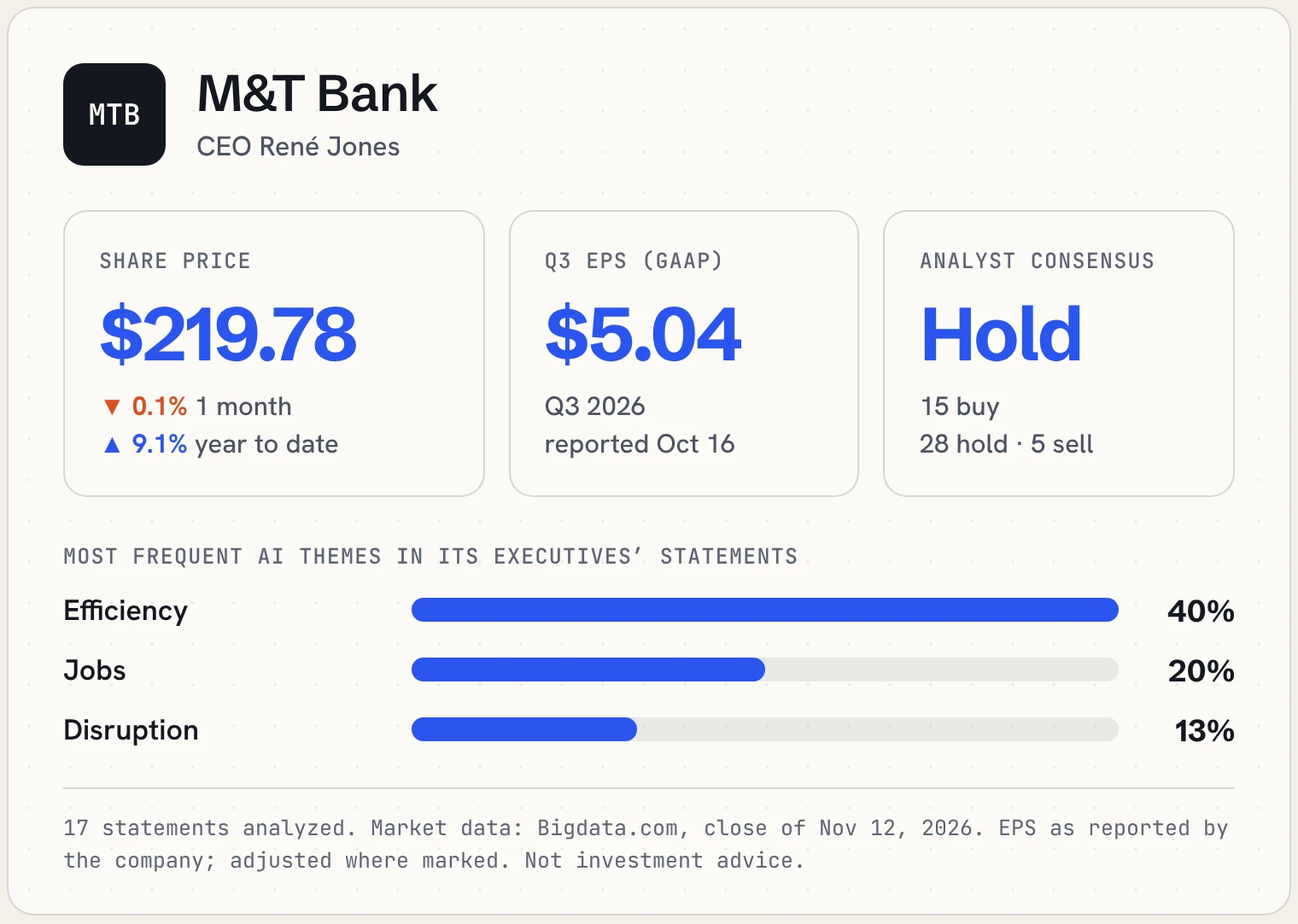
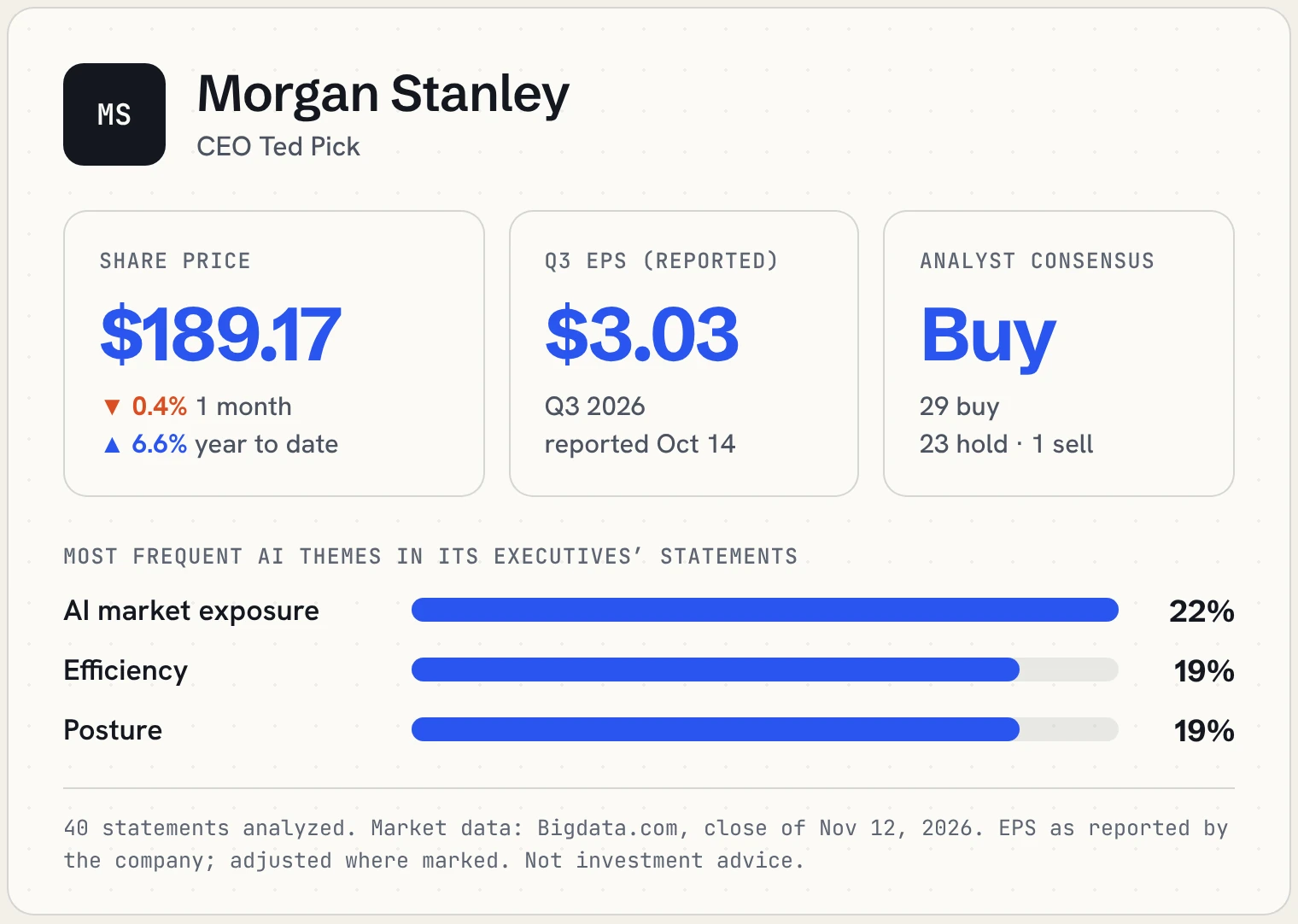
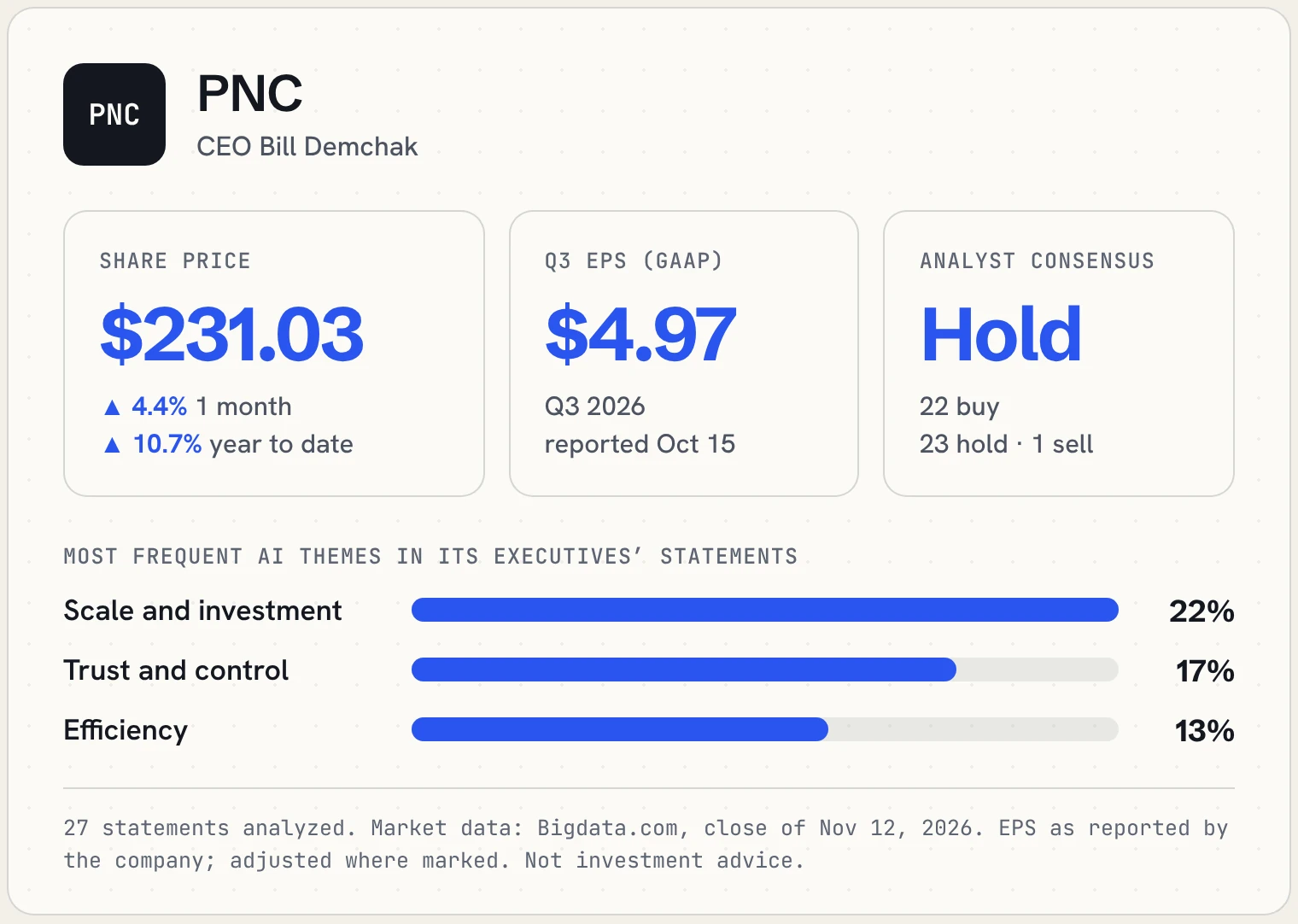
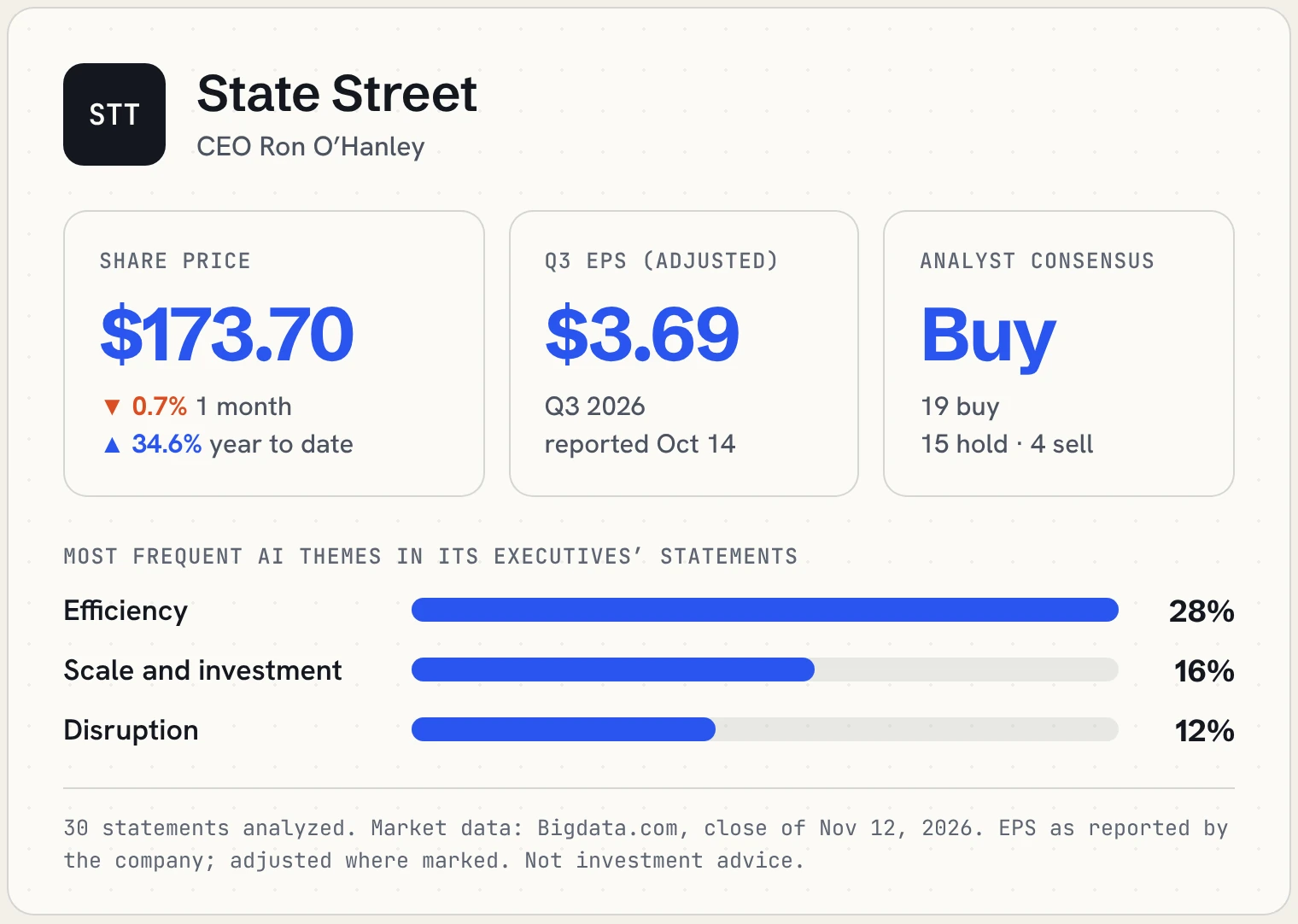
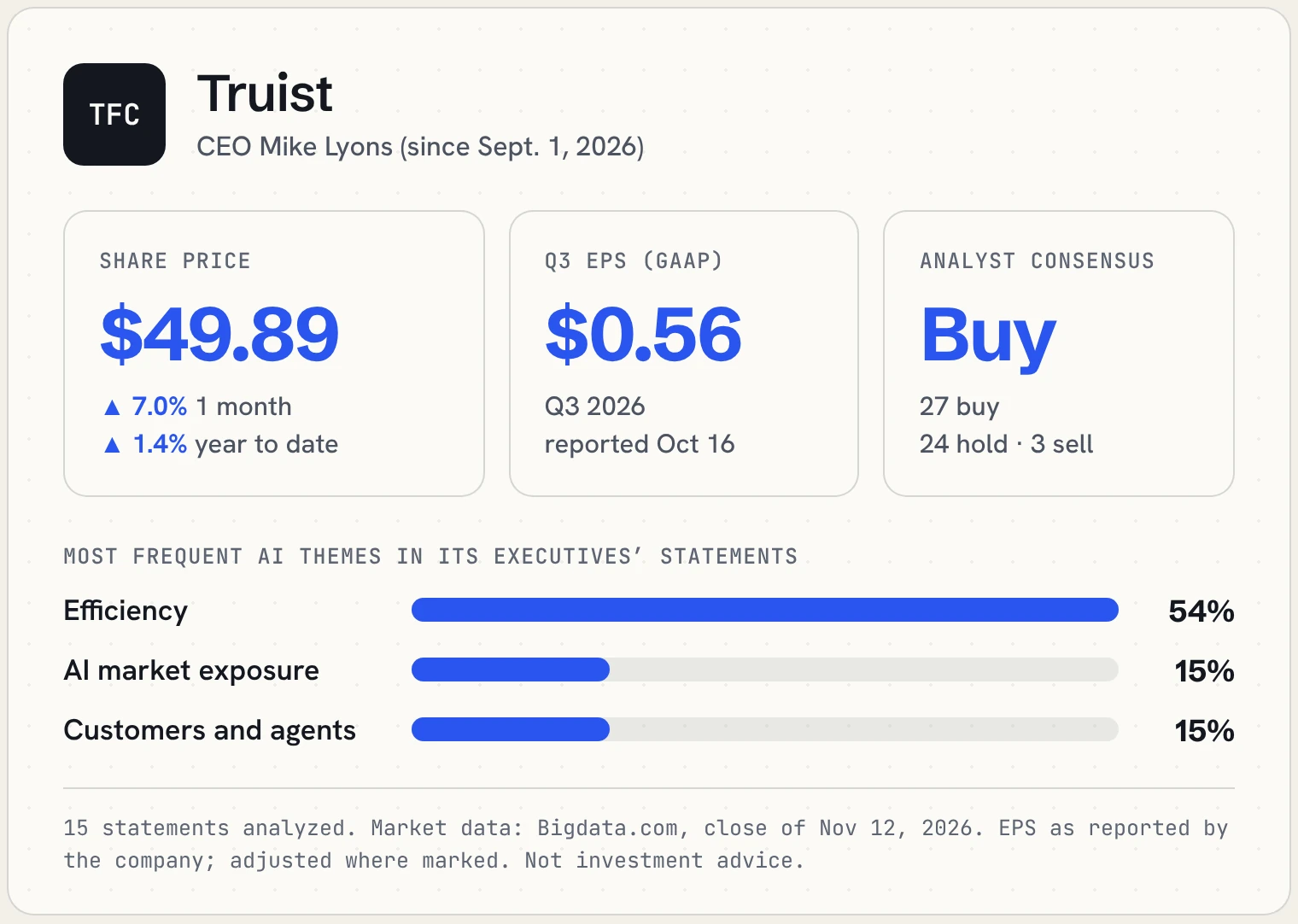
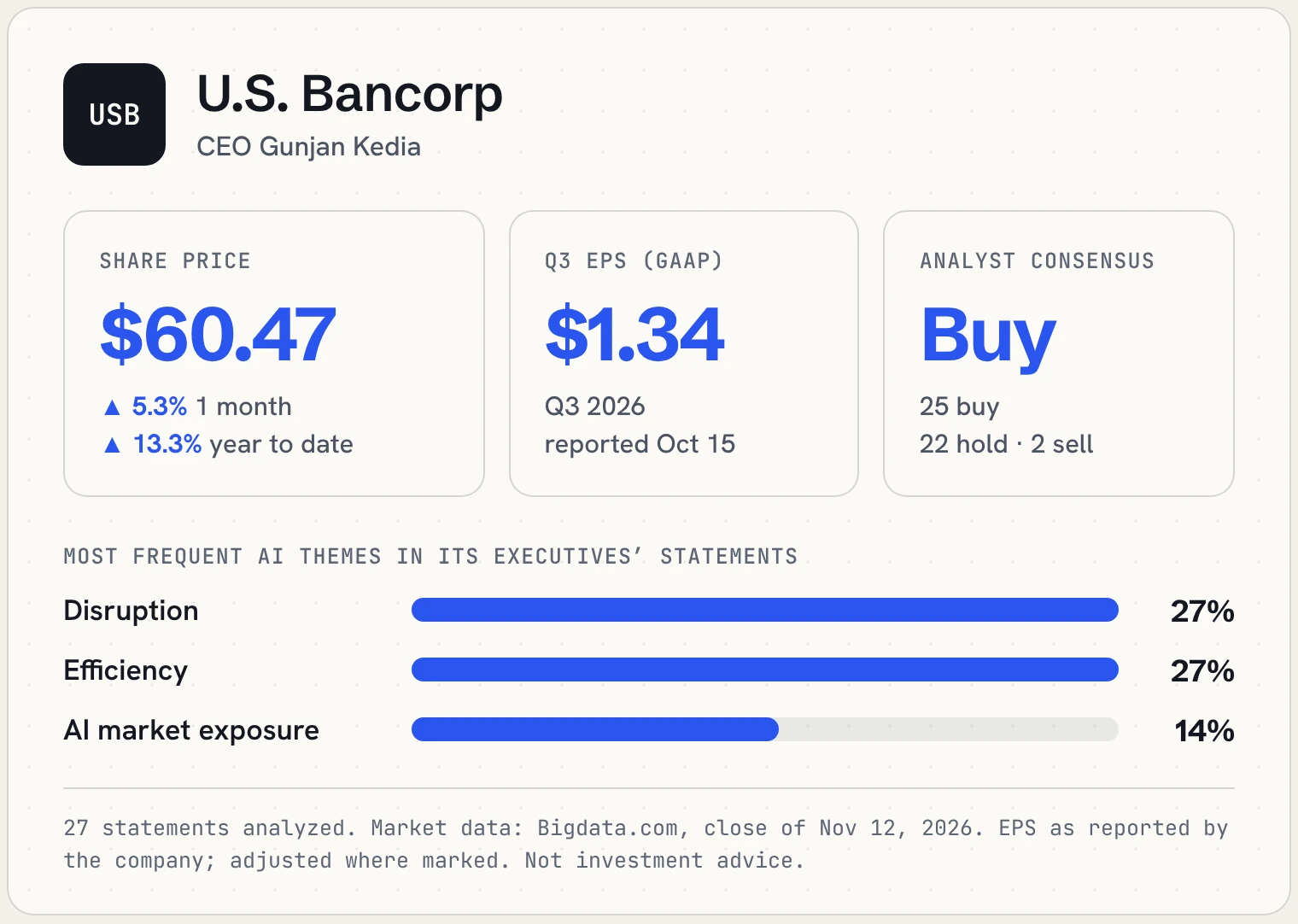
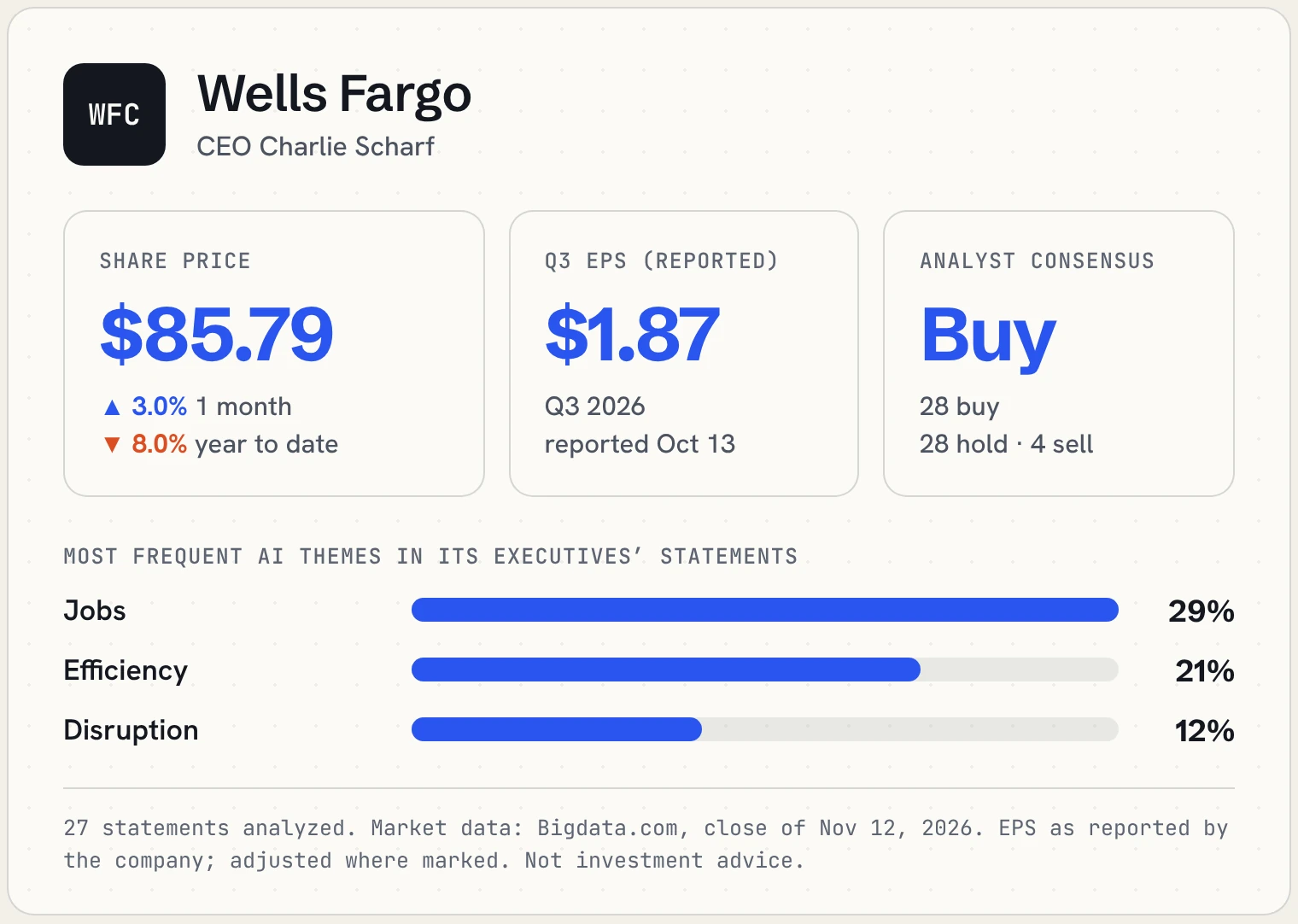
Banks differ in how much they said about AI in this data set, so read the cards as emphasis, not volume. First Citizens, for example, said little about AI on its calls, and its statements come mostly from technology executives in the trade press.
Actual Agency works with executive teams on how their company’s story is understood by analysts, journalists and the AI systems that now answer questions about them. If you want to see how your own AI narrative reads next to your peers, request an audit.
Method and limits
Universe. 20 large US-headquartered, US-listed banks and bank holding companies, selected by total assets using the Federal Reserve’s June 30, 2026 ranking of large banks and companies’ third-quarter 2026 filings. US units of foreign banks are excluded. Truist changed CEOs on September 1, 2026, from Bill Rogers to Mike Lyons.
Period and sources. Earnings calls for the fourth quarter of 2025 through the third quarter of 2026, plus press interviews and articles from October 2025 to November 12, 2026. Transcripts came from Bigdata.com, Alpha Vantage and public transcript pages. Press coverage came from Opoint and Exa.
What a statement is. A statement is one idea expressed by an executive or an analyst. The 555 statements (467 from executives, 88 analyst questions) are the set we analyzed, not a count of everything said. Percentages describe that set and should not be read as the share of all airtime.
Quotes. Every quote was matched against saved source text. Trimmed quotes are marked with an ellipsis. 13 statements are reporter paraphrase or company copy. They are counted but never shown as quotes.
Attribution. A person is named only where the transcript labels the speaker or the article attributes the quote. 130 statements, mostly from transcripts without speaker labels, are counted at the bank level and not attributed to individuals.
Themes. Each statement was read against written definitions and assigned one theme. A second review changed the theme on about a quarter of statements, and the figures use the final assignment. Some statements could reasonably fit two themes.
Market data. Share prices, price changes and analyst consensus on the snapshot cards come from Bigdata.com as of the close on November 12, 2026. EPS is the figure each company reported for the third quarter of 2026, checked against its call or release. It is GAAP or as reported where the company gave one and is marked adjusted otherwise. BNY’s price is the November 12 close from Yahoo Finance, because the Bigdata.com feed was not current for BNY after its ticker change. Its one-month change uses the October 12 close, and its year-to-date change is not shown.
Data as of November 12, 2026. This is a description of public statements and public market data, not investment advice.
Powered by Lightwing AI.
Questions, answered.
- Which banks are in the study?
- 20 large US-headquartered, US-listed banks and bank holding companies, selected by total assets: Ally, American Express, BNY, Bank of America, Capital One, Charles Schwab, Citigroup, Citizens, Fifth Third, First Citizens, Goldman Sachs, Huntington, JPMorgan Chase, M&T Bank, Morgan Stanley, PNC, State Street, Truist, U.S. Bancorp, Wells Fargo. US units of foreign banks are excluded.
- What counts as a statement?
- A statement is one idea expressed by an executive or an analyst on an earnings call or in the press. The study analyzed 555 of them, 467 from executives and 88 analyst questions, by type, theme and strength of evidence.
- Do the percentages show how often banks talk about a topic?
- No. They describe the set of statements we analyzed. Banks differ in how much they said about AI during the period, so the figures show emphasis within the set, not total airtime.
- What is a watchout?
- A watchout is a risk a speaker names or a caution they attach to AI use, such as a control, a limit or a qualifier.
- Are the share prices and analyst ratings investment advice?
- No. They are public market data from a third-party feed, shown as context next to what each bank’s executives said about AI. They are not a recommendation.